RESEARCH. ORGANISATIONS. PEOPLE.

A way into complex work

I help researchers and organisations explain their work to the people they need to reach. I start with what those people know, what matters to them and what the communication needs to achieve. I develop the approach, choose the form that fits the task and carry the work through to delivery.

Explore selected work

Research communication Federated organisations Professional communities

The audience, the approach and the finished work

Three projects showing how an audience and purpose showed me what to make.

Research communication / QUT

Building science, in the places we live

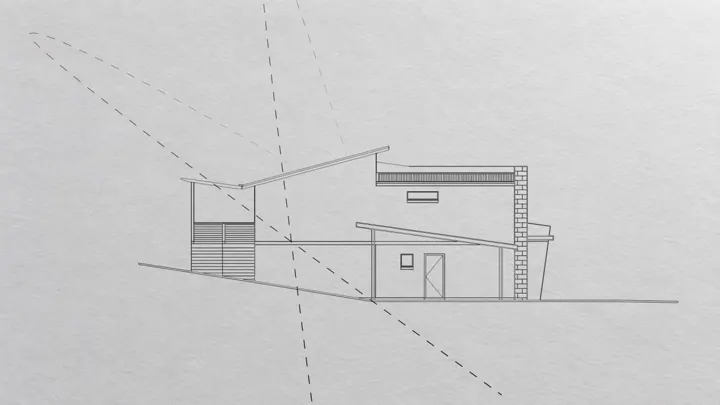
A film series showing how residential energy-efficiency research applies to real homes, and how building performance is tested.

The audience
People working across the residential development sector, alongside the people who live in (and operate) those homes.
My contribution
Four case-study films, three technical explainers and stakeholder-role animations showing how decisions across the housing system shape home performance. Produced through Outdoor Films for an ARC-funded QUT research program in 2017–18.
The approach

I worked closely with the research lead throughout the project, travelling with her to all four case-study sites and visiting the ecovillage where she lives. Those conversations gave me a much fuller understanding of the work: from the thermal mass of the rammed-earth wall in her own home to the way the community shared tools, food growing and other resources.

That understanding changed what I looked for when we were filming. In Mount Gambier, I noticed that the family’s three children were actively involved in the sustainable operation of the home. I built that into the piece because it showed the design ideas working as part of everyday family life, rather than leaving them as technical concepts.

A lot of the value came from staying close to the research, listening beyond the immediate requirements of the shoot and letting what I learned shape the communication.
Institutional storytelling / RSL Queensland

A shared history, and the people who built it

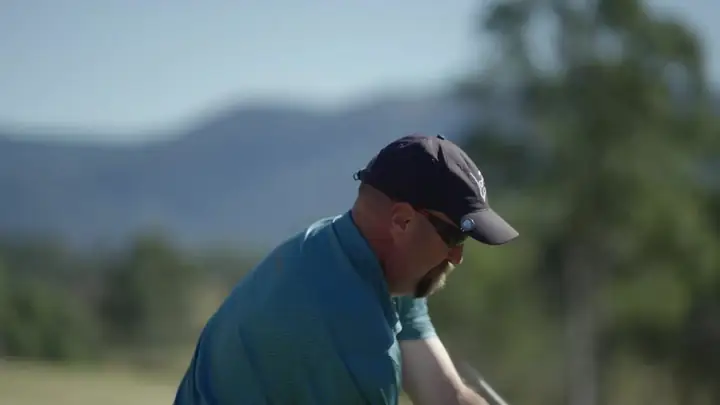
A film for RSL Queensland's 110th year, screened once at State Congress, accompanied with live music.

The audience
356 members and delegates at State Congress, whose connection to the organisation runs through their own service, their communities and their Sub Branches.
My contribution
Concept, interviewing, editorial development and production, and selecting and engaging the musician. Made within RSL Queensland's communications team.
The approach

The brief was to create something that could take the place of the usual keynote. By then I had spent years visiting Sub Branches and Districts as a representative of State Branch, listening to people whose history with the organisation long predated me. I knew the relationship between the centre and the wider network carried its own history and sensitivities, and I saw an opportunity to make something that showed the delegates we had been listening.

I built the film largely from interviews gathered across four years of those visits. That changed the editorial choices. Some of the people on screen were personally known to delegates in the room, and some had since died, so I allowed their voices more space than I normally would. The film drew the organisation’s history through the people who had actually carried it in their service, communities and Sub Branches.

I paired it with an Australian folk slide guitarist performing live beside the screen. The intention was for the film to feel less like State Branch presenting its history to the network and more like returning something the network had entrusted to us.

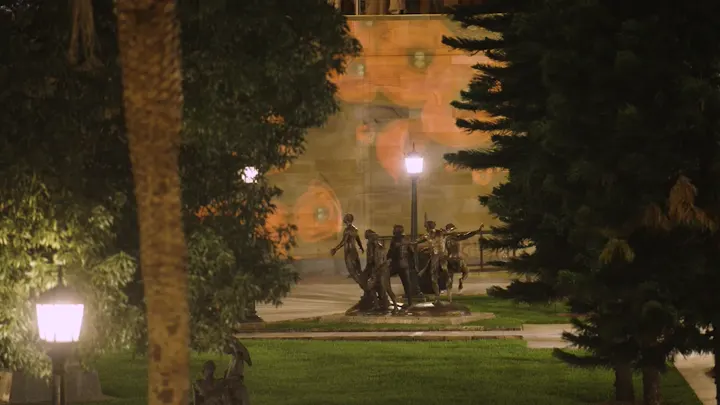
Remembrance Day activation: Anzac Square, Brisbane

The audience
General public; city commuters passing through the Square after work.
My contribution
A projection activation, 3D modeling, finished artwork
The approach

We had run this activation the year prior with an outsourced artwork. I'd been thinking about the general public audience and how we might better reflect their lived experience, to connect them more closely with commemoration.

One idea I had in 2023 was to show who was behind the Sub Branch stalls we pass in shopping centres and public places, selling poppies and badges. I turned that idea into a National Volunteer Week campaign story featuring the Women's Auxiliary at the Goodna Sub Branch.

For the 2025 Remembrance Day TVC I shot a sequence at Central Station, above Anzac Square, to show a direct interaction between a commuter and veteran selling poppies.

I learned 3D modelling to redevelop a more photorealistic poppy animation for the activation itself. The details mattered here, and resulted in a far more arresting and impactful installation in a shared public space.

Professional community / Teach Starter

A reason for teachers to make time

Professional development webinars for a national community of primary school teachers, with specialist contributors and practical classroom resources.

The audience
Primary school teachers seeking professional learning relevant to their classroom work.
My contribution
Topic development, scheduling, EDM and social promotion, presenter support, platform selection, live production, audience interaction and post-event distribution.
The approach

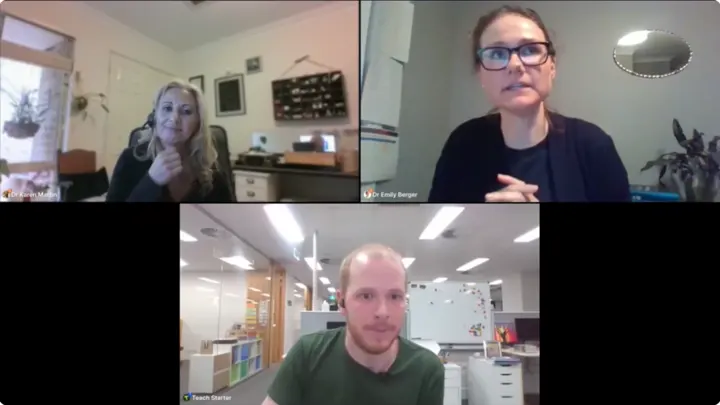
Teach Starter was a small, collaborative content and marketing team, including several former classroom teachers. I was encouraged to bring ideas beyond video and trusted to carry them through myself, with people around me who understood teachers’ working lives intimately.

Professional development is a continuing requirement for Australian teachers, but finding time for it is another matter. The webinars gave us a way to make useful sessions accessible around topics teachers were actively grappling with, including trauma-informed practice and authentically incorporating First Nations perspectives. Registrations grew to reliably reach 2,000–3,000, and we often hit the 800-person concurrent limit of the platform I had chosen.

I treated the live event as one part of the communication rather than the endpoint. I recorded each session in full, packaged and uploaded it immediately afterwards, then sent the recording to every registrant that night. That meant teachers who could not make the live session could still use it on their own time. It was one of the first places in my career where I could choose the form around the audience need, then build the whole delivery process around making it genuinely useful to them.

Climate-education series

Listen to episode
The audience
Primary school teachers and administrators.
My contribution
Concept, editorial development, talent sourcing, interviewing, hosting and production.
The approach

In 2021 I pitched a climate education series because I wanted us to do something more substantial with an issue I cared about and that teachers were already having to navigate with their students. It was outside the work I had originally been hired to do, and parts of it were new territory for me. I set the editorial direction and found the people who could speak to it with authority.

The two main episodes approached the subject from different directions. Collective Action Starts in Schools brought together teachers in five countries to ask what climate education actually looked like in their classrooms: how they found room for it in the curriculum, connected global problems to local experience and gave students ways to participate. Supporting Children & Inspiring Hope went underneath that practice. In conversations with researchers Susie Burke and Ann Sanson, I explored how children can encounter the reality of climate change without simply being overwhelmed by it — through age-appropriate understanding, connection with the natural world, and opportunities to act that build agency rather than helplessness.

The project came from a personal feeling that I should be doing more, but it also connected closely with why I joined Teach Starter in the first place. I wanted us to make something genuinely useful for teachers and to act on the values we talked about publicly. The series gave me the freedom to turn that impulse into a substantial body of work, using people with deeper knowledge than mine and shaping what they knew into something teachers could actually use.

Listen to episode
The closing episode of the series, in which Scottish geography teacher Mike Creamer gives the final reflection.

Teacher Voicemail

The same freedom to experiment also led to Teacher Voicemail. I proposed a weekly question for the teacher community, collected their responses as Instagram voice messages, then built short Friday podcast episodes around what they sent us. It was a simple way of letting a dispersed professional community hear from one another, rather than always hearing from the organisation.

Listen to episode

Understand the task before choosing the form

Understand the task and audience

I clarify what the communication needs to achieve and what the people it must reach already know, trust and need. That gives me a basis for deciding what needs explaining and what might help them engage.

Work with the people who know

I work with the people closest to the subject, learning their language and helping them express what matters in their own terms. What they know, and what they are willing to share, can change the approach.

Choose how the work will reach people

I choose the form and channel around what the communication needs to do and where people will encounter it. I consider the detail they need, the attention they can give and whether the task calls for explanation, conversation or participation.

Carry the decision through

I carry the approach through development and delivery, working hands-on and coordinating contributors where needed. I use audience feedback and relevant measures to assess whether the work served its purpose and what to improve, while keeping clear about what the evidence can support.

Communications practitioner and filmmaker

My experience includes running Outdoor Films, teaching screen practice at QUT, producing content and digital events at Teach Starter, and strategic and multimedia communication at RSL Queensland.

At RSL Queensland my work spans member and veteran stories, commemorative campaigns, service communication and internal reporting. I have also led a small multimedia team. I help decide what the communication needs to do, then carry that approach through the creative and production work.

I'm interested in roles that combine learning about specialist work with explaining why it matters and how people can engage with it.

The ideas behind my approach

My early study explored how meaning develops between a storyteller, a medium and an audience. That question still shapes my practice: what will a particular person recognise in this work, and what will they need help to understand? The people who contribute to a project can change the answer. What they know, how they explain it and what they are willing to share can change its form. This applies across films, live conversations, learning resources and digital experiences.

Selected reading

Get in touch

I'm interested in research and organisational communication roles where I can help decide what's needed and see the work through.

michaeljamesgillett@gmail.comLinkedIn